Every summer, our lab offers students and early-career researchers the chance to step outside the classroom and into the field, where theory meets practice, and curiosity leads the way. Whether collecting data in remote environments, collaborating with local communities, or navigating the unexpected challenges of fieldwork, these experiences provide invaluable opportunities for growth, discovery, and connection. Here are some shared firsthand reflections from some of our summer research team:
Jessica Puistonen
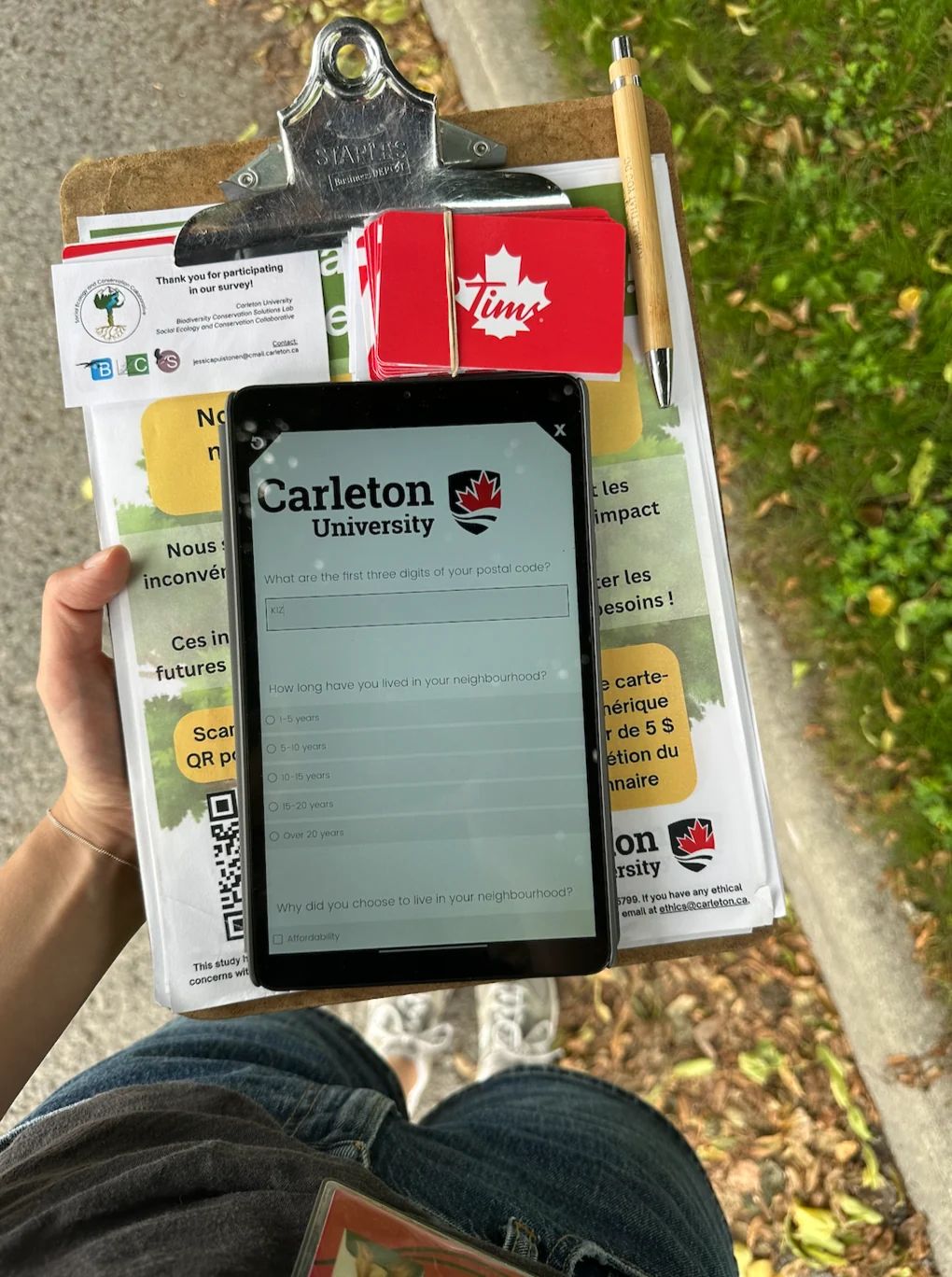
Over the summer of 2026 I conducted fieldwork to collect data for my Master’s thesis titled, “Perceptions of urban trees in low canopy-cover neighbourhoods: ecosystem services, disservices, and their sociodemographic drivers”. Although past projects I have contributed to involved data collection in meadows, forests, and oceans, this ‘field’ season looked a little different this time. I went into urban neighbourhoods across Ottawa, Ontario, characterized by having low-canopy cover and diverse demographics, to survey folks about how they perceive and value trees and nature in their communities. Using a door-to-door sampling method, I conducted 301 surveys and 25 outdoors interviews, either in people’s yards, or on walks through their neighbourhoods. Although this process was challenging at times, it was incredibly rewarding to hear directly from community members and share in the ways the trees in their neighbourhoods affect their lives.
Mélanie Brochu
Over the summer, I collaborated with researchers from the University of Saskatchewan, Saskatchewan Polytechnic, and the National Research Council to pilot a pheromone trap program in northern Saskatchewan and Manitoba. Together, we deployed 300 traps across six sites, testing a range of pheromones and plant volatiles in partnership with local wild rice producers to monitor the invasive wild rice worm (Apamea apamiformis). This project was especially exciting because it represents a significant first step by Canadian researchers in addressing this emerging threat.
Fieldwork allowed us to explore rural areas, engage with producers about the effects of wild rice worm infestations, and discuss future strategies to mitigate an invasion that causes producers tens of thousands in losses annually. Looking ahead, I’m eager to build on this experience by conducting life history studies at the University of Alberta in the spring, thanks to additional larval collections from our partners during this past wild rice harvesting season.
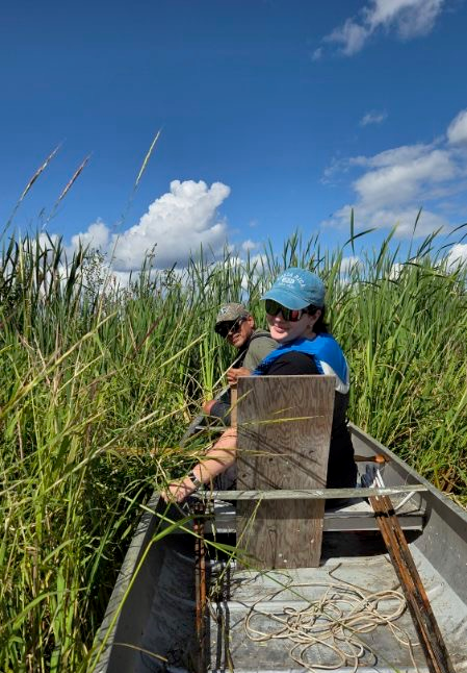
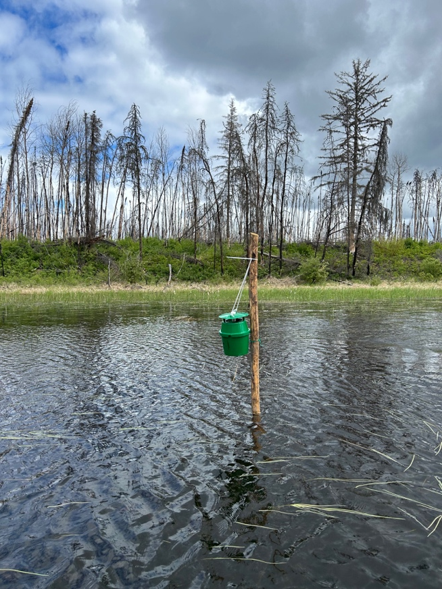
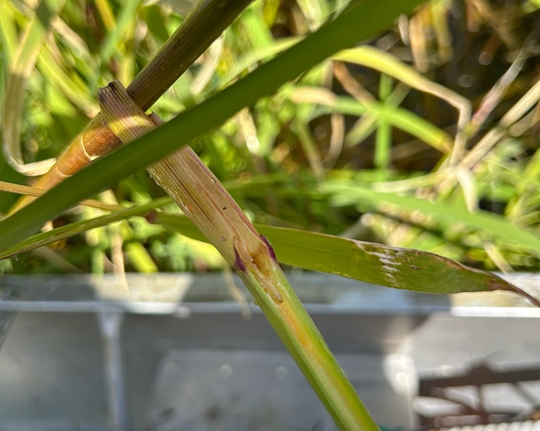
Mélanie Brochu EDI Summer reflection:
Alongside my fieldwork this past summer, I was honoured to be one of two students awarded Carleton University’s Student EDI Award. My project, “Between Inclusion and Erasure: How Indigenous Stewardship Informs Environmental Monitoring in Canadian Conservation Research,” aimed to investigate how Indigenous knowledge and stewardship are acknowledged—or overlooked—in environmental monitoring practices. As a Wolastoqewi scientist, my identity shaped my research and reinforced my belief that environmental monitoring is not only a scientific pursuit but also a matter of social responsibility and governance. In the context of intensifying climate-related threats, I believe Indigenous peoples and their knowledges must be prioritized in environmental research and decision-making. Receiving this award has deepened my commitment to advancing Indigenous representation in scientific spaces, and I am excited to share my findings at my upcoming presentation in November.
My research summary can be found here: https://carleton.ca/provost/wp-content/uploads/sites/98/2026/10/Melanie-Brochu_EDI-Research-Summary.pdf
Tamara Donnelly
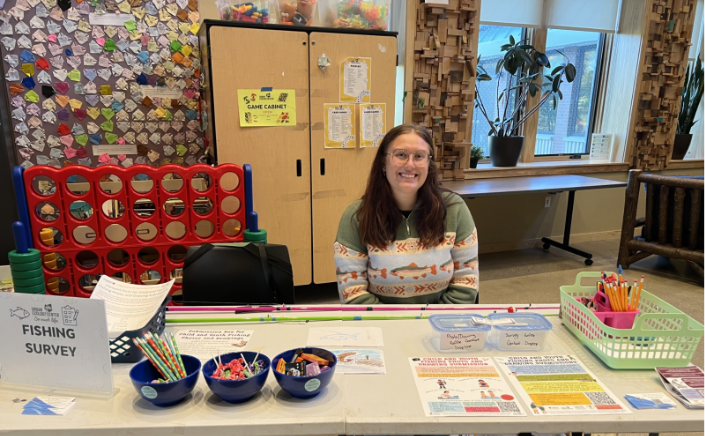
During June and October 2026, I had the opportunity to travel to Milwaukee, Wisconsin, and the Chicago, Illinois, area to conduct fieldwork alongside several community organizations and partners. Throughout the summer, I collaborated with the Urban Ecology Center in Milwaukee to administer surveys and collect drawings from children and youth participating in their free fishing rod lending program. At the Center’s Autumn Celebration in the fall, I was delighted to return and award fishing rods and gear to two youth who participated in our research and were drawn as the winners of our raffle! They were so excited to have a fishing rod of their own, and we were able to purchase them through our community partner A&C Live Bait Inc.
In addition to this work, I met with numerous community partners across Milwaukee and Chicago to strengthen existing collaborations, plan future research activities, and begin developing partnerships related to an upcoming project on winter and ice fishing in Wisconsin.
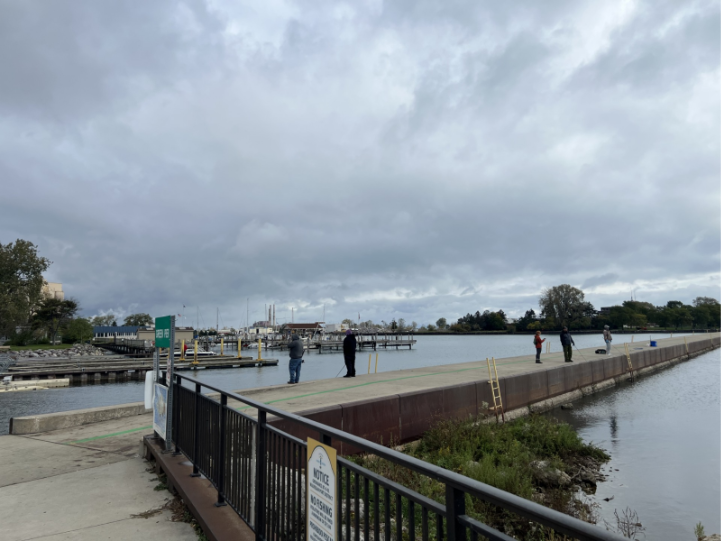
In October, research assistant Sarah Lavallée and I conducted intercept surveys with salmon anglers along the Lake Michigan shoreline to learn more about Illinois’ salmon snagging fishery and the experiences of those who participate in it.
I am grateful for the opportunity to work with these communities and organizations and look forward to continuing this research, deepening partnerships, and expanding these projects in the coming year.