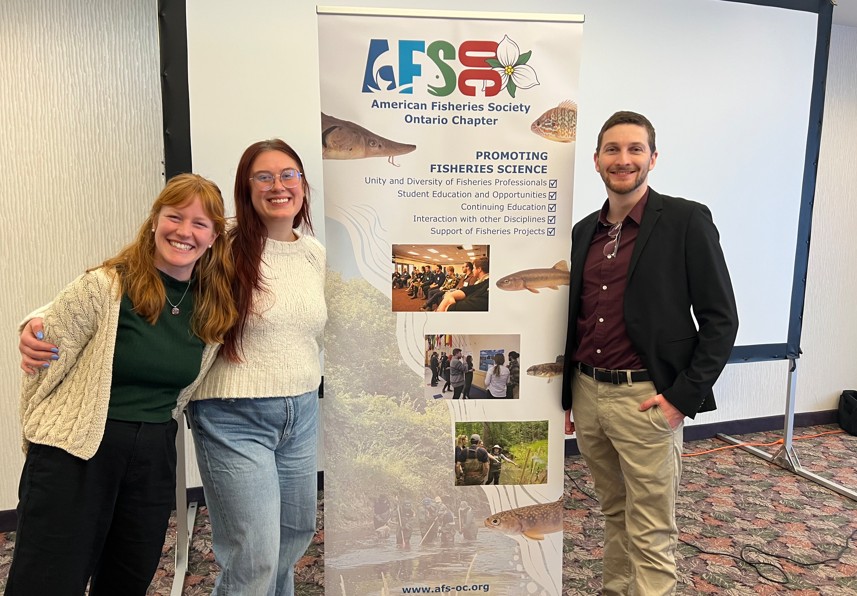
Reflections by Sarah Lavallée
1. Human dimensions research is increasingly acknowledged in the fisheries science space. It was really nice to see other human dimensions conference attendee, Alyssa Goodenough, and her presentation on the intersectionalities between feminism and fishing (link to her thesis here). I felt that the human dimension aspects were well-received by the other researchers/attendees. It was encouraging to see others also blending social science theory with fisheries science/management.
2. Smaller conferences are really nice for socializing and networking. Tamara, myself, and Katie (Cooke Lab) ended up having dinner with Gary Whelan, President of the AFS one evening! It was much easier to have casual conversations and get to know the other attendees in a smaller setting and venue. I would definitely keep the size of the conference in mind when considering which conferences to attend in the future.
3. The Nature Museum Collections are a treasure trove of information and data. As part of a field trip, we went to the Nature Museum’s collections (a separate facility in Gatineau) and I was blown away by their ichthyology collections. They have massive rooms full of preserved fish species in jars dating back to the 1800s! As a public resource, you can also request to have samples mailed to you for research purposes and they have also digitized most of their collections. We also learned about the intriguing parasitic relationship between mussels and fish. Larval mussels attach to fish gills and fins to complete their life cycle. Therefore, when the host fish species decline, so do the mussel species, along with all the other ecosystem services that mussels provide in that aquatic ecosystem. Also, the organization system in the collections is truly inspiring.
4. Know the geological and ecological history of the systems that you’re working with. Gary Whelan, President of the AFS, highlighted the importance of taking the time to understand the history of whichever environment or system(s) you are working with in his keynote talk. Particularly within these turbulent political times, Gary emphasized how important it is to understand history to avoid repeating it. He used the example of the old-growth logging industry in the midwest during the 1800s and how that completely altered the landscape, which helps explain why certain activities deemed as “restoration” projects aren’t actually restorative to what the land once was.
5. There are changes proposed to the new Species Conservation Act, including the delisting of several species. One of the presenters gave a talk on the proposed changes to expect in the new SCA in light of Bill 5 (Protect Ontario by Unleashing our Economy Act). Aquatic species and migratory birds are the two groups most impacted by the proposed changes. This is something to keep an eye on, as it could impact government funding decisions, research priorities, etc.
Huge congrats to Connor and the executive team at AFS-OC for putting together such a great conference!